Pen Pencil Bristles
Other artistic endeavours (no computers)

Water colour
A Grand Poohgoda
If Kew Gardens has a Great Pagoda, then Pooh Bear shall have a Grand Poohgoda.

The Middle East
This little doodle of the Middle East makes it look cute and peaceful. How wrong that is.

Dolphins
A bit of whimsey - dolphins in Lighthouse Cove.

The Shipping Forecast
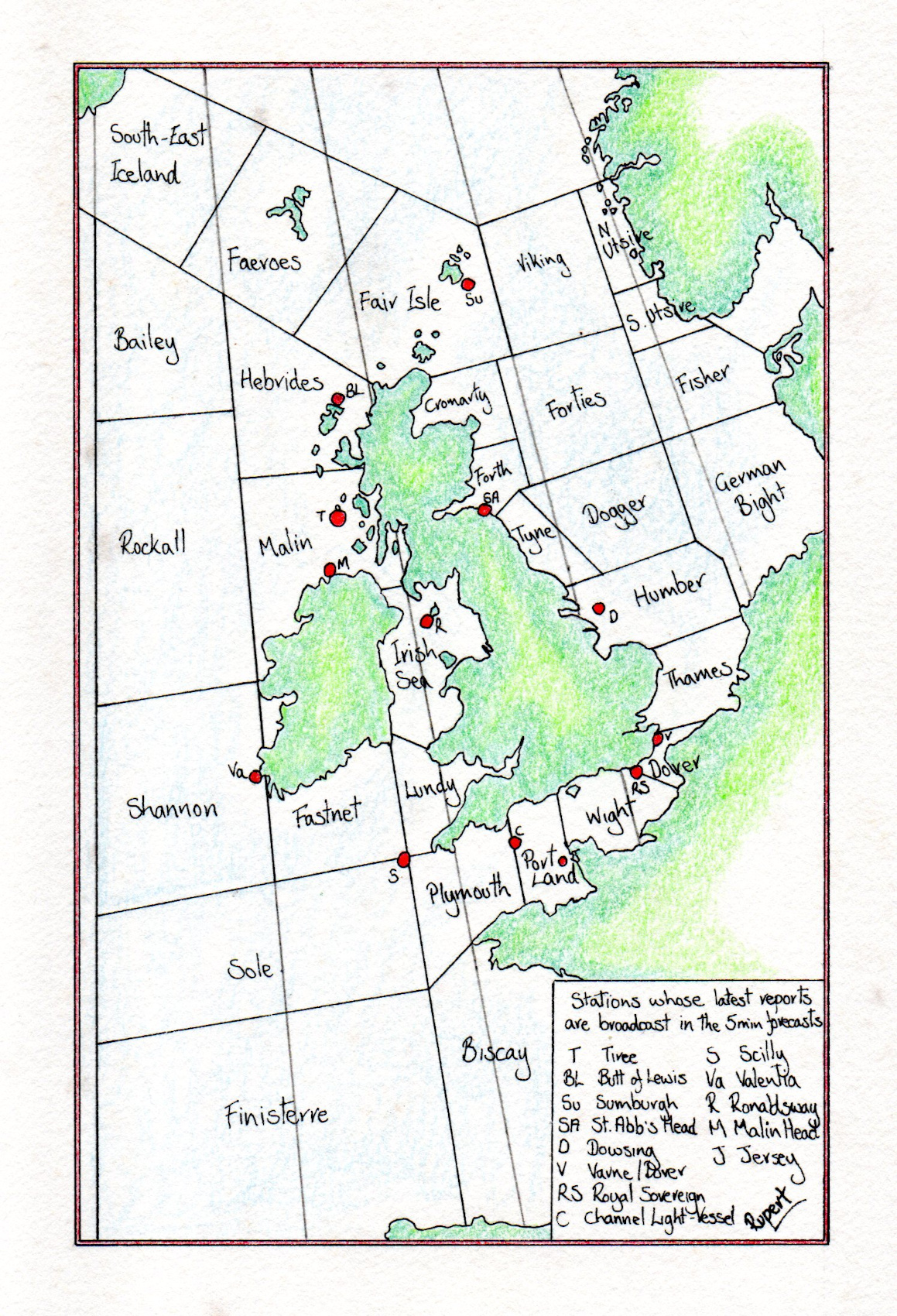
If you have ever wondered where those funny Shipping Forecast places actually are ...
Postcards from the heart

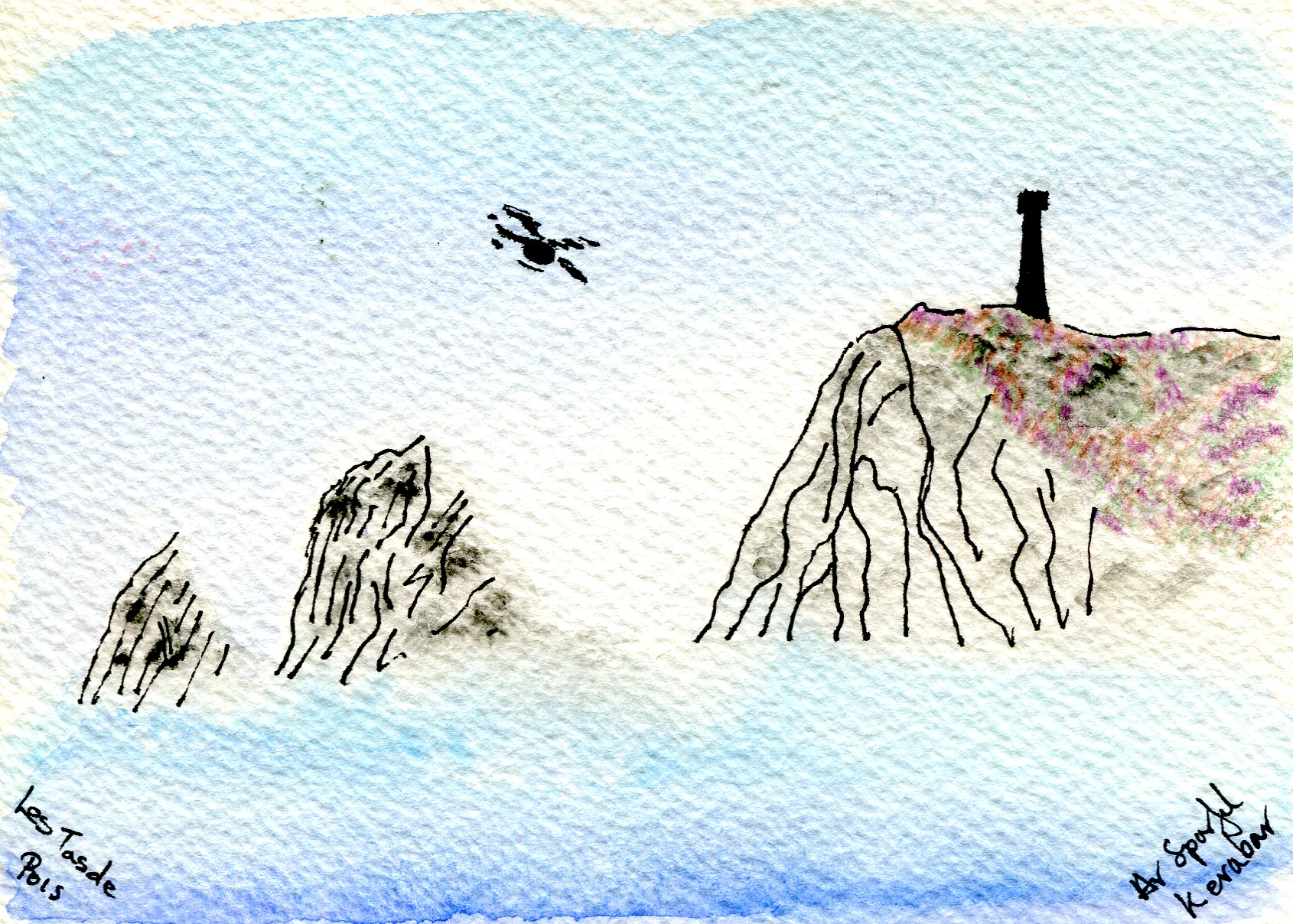
This is a great thing to do on holiday - even if you have convinced yourself you are no artist. You can get packs of postcard sized watercolour cards from lots of places including Eckersley's. Pop a black roller pen and some coloured pencils into your holiday bag and off you go. A person will remember the hand made postcard you sent them long after all the social media selfies have been lost.


Cartoons
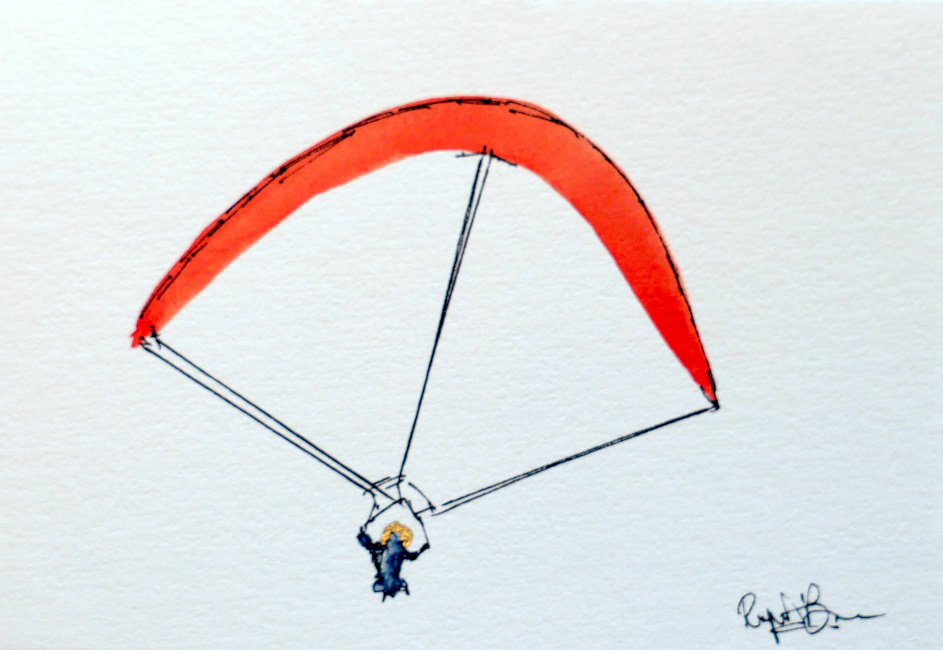
I was rummaging around in old files and came across a couple of drawings I did years ago - early 1990s probably. I was working at a company that made full flight simulators. The simulation company was a very sophisticated user of computer technology. The simulations were a mixture of code and of functionality provided by custom built analog electronic interface boards. This was technology that had been developed and refined over many years.
The 1990s was a time of great disruption because of advances in chip technology. It felt like overnight the old simulation computers were rendered obsolete by new RISC based systems including machines like Sun Sparcstations. The new computer technology was also significantly cheaper - a simulator computer system could cost in the millions. The new ones were a fraction of that.
I did these two cartoons at that time. They show the effect of that transition. It was troubling for a lot of the engineers. The world they knew and loved was radically changed. Now of course computers have so much power, you could probably run the code from a simulator of that time on a modern laptop. I was told that the flight program for the first 747 simulator took only 64 KB of memory.


The computer companies from that time have pretty much disappeared - Concurrent, Gould, Encore, Harris.
Rich pictures
If you combine colour with cartoon style drawings you have the basis of rich pictures. Rich pictures are part of Checkland's Soft Systems Methodology. The rich picture is used to gather unstructured information on a subject (a problem or situation) which can then be analysed and transformed into more structured models with the aim of developing solutions or innovations.
Cellar Door
If you live in and around Melbourne (Australia), I hope you get a chance to travel down to the Mornington Peninsula and have a long lunch at one of the many cellar doors. The variety is huge - from old sheds to world-class fine dining establishments. For a full list consult the map.
A cellar door is a complex operation. Typically it includes elements of hospitality, viticulture, wine making, food service, sales and marketing and an endless array of compliance and legal requirements.
A cellar door is quite an undertaking. This is my rich picture of a cellar door:

Every cellar door will have unique qualities but I think I have captured the main elements of the business. Depending on what you wanted to achieve, using this image you could go on and develop business process maps, capability models, or even training materials.
Anatomy of a life
This rich picture is showing the significant array of forces that impinge on us as we move through life. People will suffer or benefit from forces to different extents. The only thing to do is to be aware of a situation and take action to make the most of it - easy to say but at times it can feel overwhelming. Planning to move to an "ideal" future state has to be a good thing.

Acrylics
Out Back

I started painting years ago at school under the watchful eye of Colonel Roddy, the Art Master. Back then it was all oil paint and the art room would be full of the smell of turps and linseed oil. Oil paint has a very distinct quality and is a brilliant medium, but can take a while to dry.

I feel like acrylic paint feel doesn't offer quite the same range of possibilities as oil, but what it lacks in flexibility it makes up for in ease of use. You can wash your brushes in water and stand a good chance of being able to move the picture the next day. Both of these are little studies in acrylic.
Signalman

For centuries artists have used paintings to convey messages. This is my homage to that idea. The picture is called "Signalman - I see you". I think you can guess where the message is.
Family
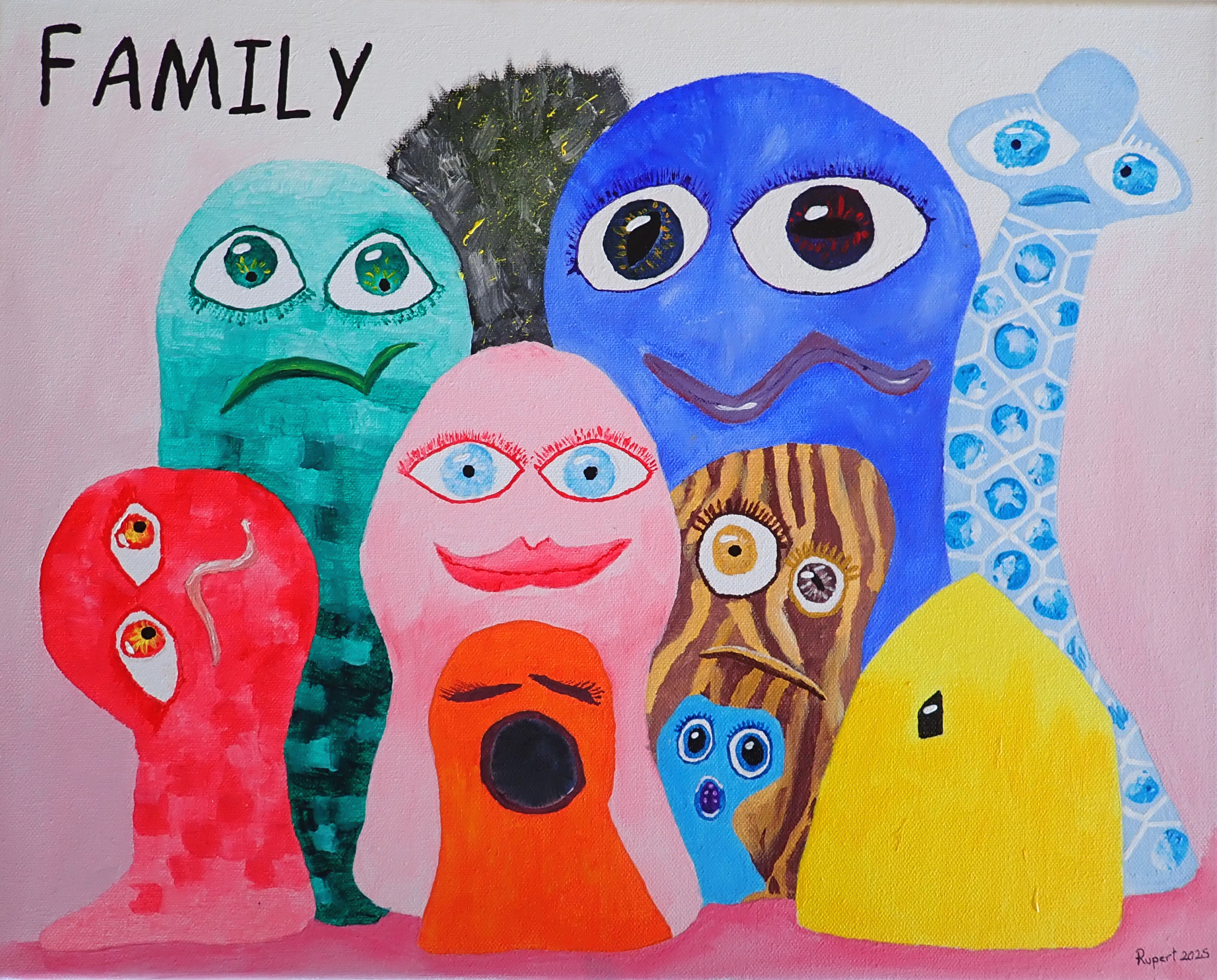
You have just woken up. You are lying in bed with no pressing reason to get up. It is warm and comfortable and you can let your mind wander in that dreamxeam kind of a way where ideas wash over you. I love those moments. For me they seem to be incredibly productive when it comes to new ideas. It was one of those moments that gave me this piece of draftwork. When I did get up, I captured it in a quick pencil sketch. For some reason I called it Moomins. I'm not sure why - I like the word - but they are definitely NOT Moomins. Moomims are the creation of Tove Jansson.

Family - you never know what you are going to get. I couldn't help myself - I had to paint the picture in a cartoonish way. That's just what it is. I sent it off to a young relative who has started a family. Apparently she likes it so hopefully it won't end up in the outside toilet.
Angry Tree Man
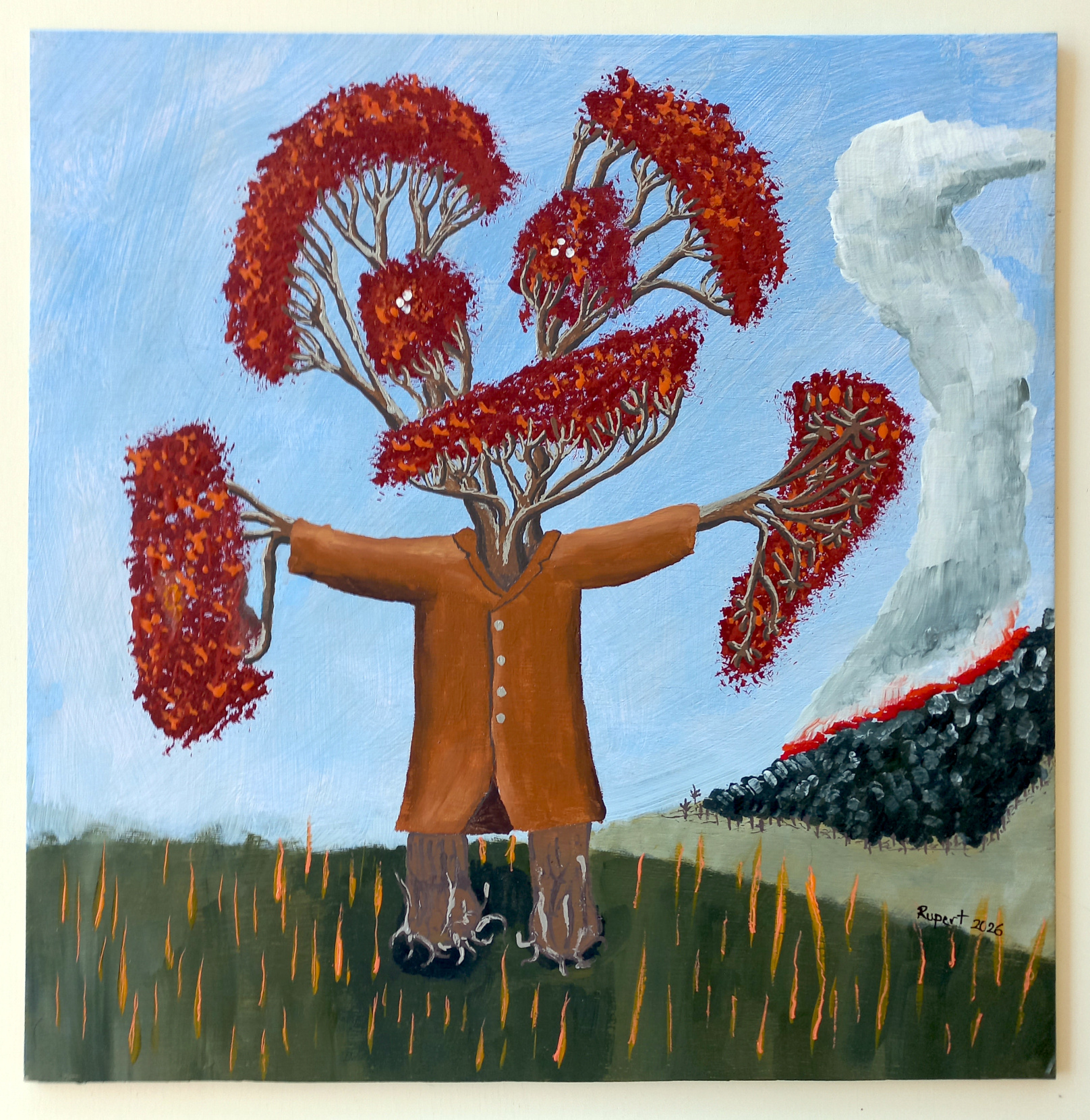
Some governments and large corporations seem to be fine with the damage we are doing to the environment despite stronger and hotter wild fires, tornadoes and hurricanes. Some people won't even recognise that there is a problem, and that makes me wonder about the state of their mental health. This picture is about a time when Gaia loses patience with mankind and finally sends an ambassador to tell us to stop. I hope we listen.
Mixed media
Flow and gilt
A while ago a family member was trying out flow art - that technique where you use gloss liquid paints to create dramatic colourscapes. She left one lying around and I had been thinking about it for a while. I liked the colour scheme. To me it looked marine with possibly some mysterious 'deeper' sections. I felt I could play around with it a bit and for some reason came up with the idea of 'golden whales' - inspired by the marine vibe? I'm not sure.

The first thing I needed was a whale image. There are millions on the internet. I used a drawing package to trace a basic outline and then tweaked it to get it how I wanted. I printed the image on A3 paper and then did my tracing trick. On the opposite side of the print to the one you want to see, add a good layer of pencil lead to the paper following the whale outline. Then put that side down on the painting, hold in place with sticky tape, then draw (press on) the outline of the image to be transferred. When you lift up the paper, you have your tracing transferred to the picture.

I bought Peboe gold and silver leaves - it's not real gold and silver but looks pretty good. I also got hold of X-PressIt gold size. I don't know if these are particularly good brands but it all worked out well. The process now is to get a brush and fill the whale shape with liquid size following the tracing. Fill the space - anywhere there is size, the leaf will stick. Leave the size for ten minutes to cure. Get your leaf ready.
The leaf is incredibly delicate. Best to use tweezers to hold two edges and make sure there are no draughts or air movements in your work room. As best you can, lay a leaf across the area you have painted with size. Do that again till the whole area is covered - you will end up wasting some leaf. Then cover the leaf with a piece of paper and gently but firmly press the leaf to the painting. Now leave it for ten to twelve hours.

After that twelve hours the leaf should be solidly stuck to the size to the picture. The trick now is to get rid of the leaf that isn't stuck. The best way I have found is to use a large bristle paint brush and gently brush the non-stuck leaf away. Be gentle and work at it till you get reasonably clean edges.
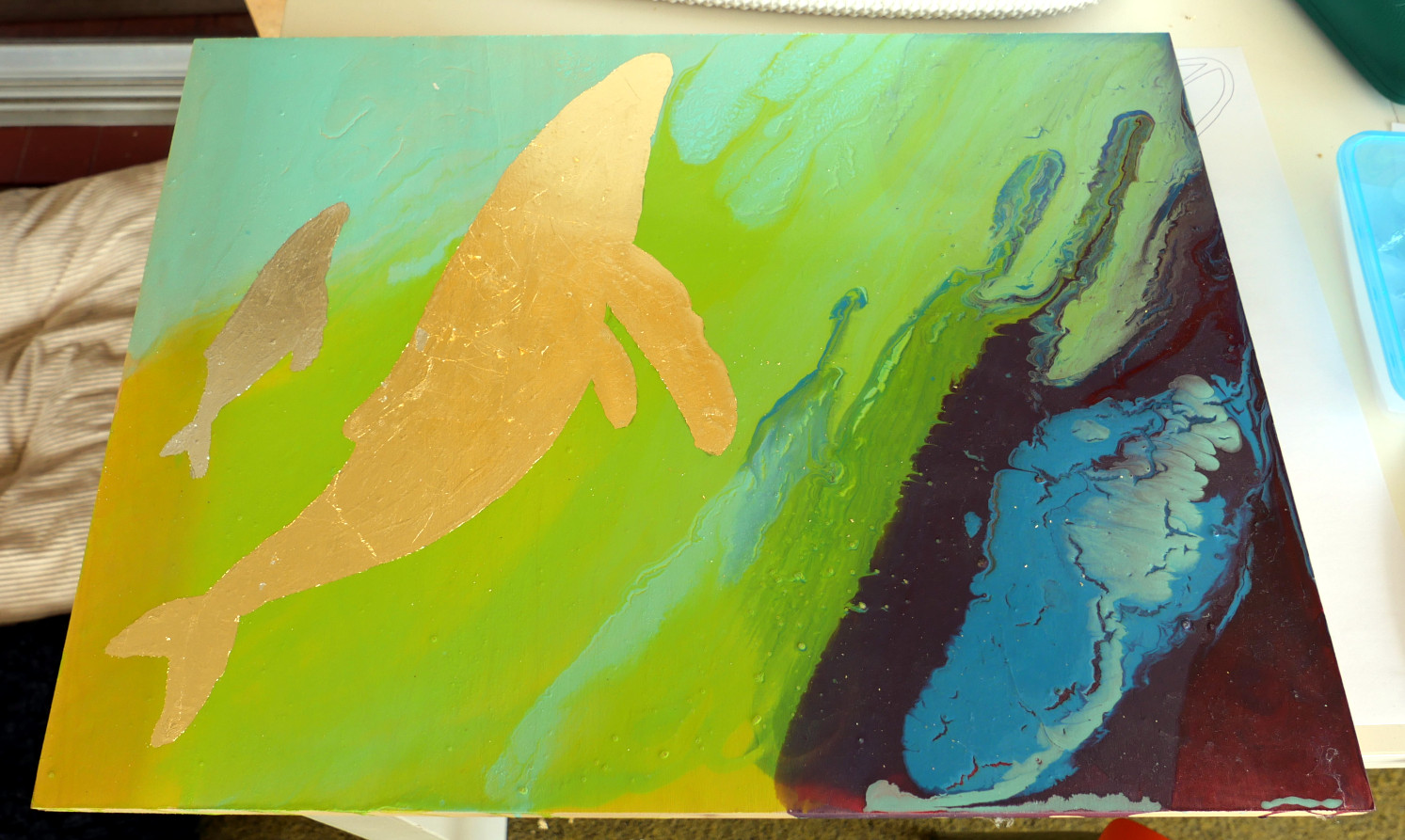
That was all very good. I ended up with a solid gold adult whale and a silver baby but I wanted to add some detail. Humpback whales have quite distinct colour patterns on their bodies and fins. With reference to a couple of good images I used the size again to recreate some of those patterns. Then applied silver on top of gold and vice versa. After another twelve hour wait, and a black marker pen to make an eye, I had my finished picture. Perhaps not a great work, but very cute nonetheless.

French avant-garde
It's OK to create art and not like what you produce. In fact it is a very necessary part of the process in deciding what you think is good and bad art - given that such a thing is possible. Many years ago I painted a small picture called 'Flame Tree'. I didn't think it was very good at the time but I kept it for years. I was looking at it recently and decided I didn't want to keep it. It embodied some unpleasant memories and certainly didn't bring me any joy. So what to do?

I know I've seen many examples of this - Banksy's shredder being a recent example - you can create an art work by destroying a piece of art. My picture is called the Flame Tree - what better thing to do than burn it? So that is what I did.

I recorded the whole thing and then used a simple video editing program to produce the result below. Flame Tree, the oil painting is no more, but the Destruction of Flame Tree lives on in digital form. And just for fun I went all Frenchy in the process. Shame I didn't have any Gauloises and Absinthe. Mind you, if I had I probably would not have stopped at one painting ...